
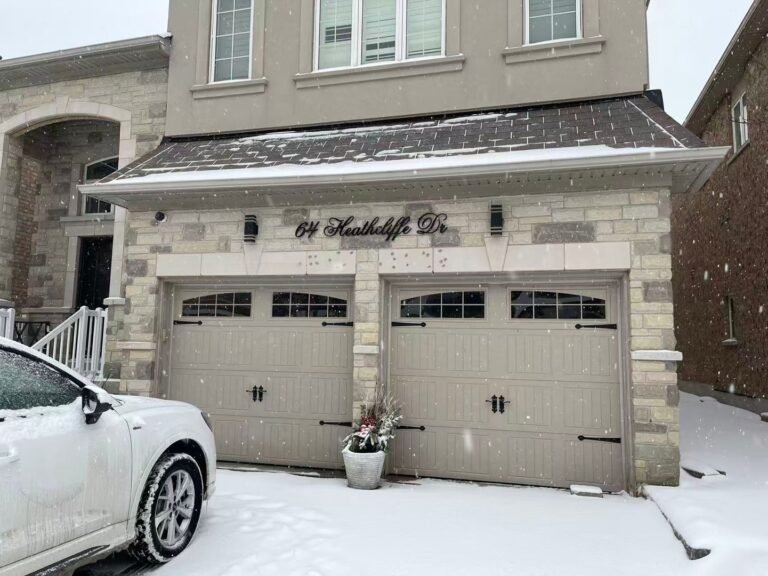
As Toronto gears up for another round of icy winds, snowfall, and freezing temperatures, it’s useful to prepare your home—and that includes your garage. A functional garage door helps protect your car from the elements and limits cold air entering through the garage. Use this practical checklist to prepare your garage door for Toronto’s winter conditions.
1. Inspect the Weatherstripping
Weatherstripping is your garage door’s first line of defense against the cold, keeping icy drafts and moisture out. Check the weatherstripping at the bottom and sides of the door for cracks, peeling, or gaps.
Toronto tip: Due to fluctuating temperatures, weatherstripping can become brittle and crack easily. Replace any damaged sections to ensure a snug seal that blocks cold air and prevents water seepage.
2. Lubricate Moving Parts
Cold weather can make garage door components stiff, leading to noisy or jerky operation. Applying the right lubricant can help keep everything moving smoothly even in sub-zero temperatures.
- Use a lubricant suitable for cold conditions: Check the product label and garage door manufacturer guidance before applying it.
- Focus on these areas: Hinges, rollers, springs, and the door tracks.
Note: Avoid over-lubricating as this can attract dust and grime, which may interfere with the door’s movement.
3. Check the Balance and Springs
An unbalanced garage door puts strain on the opener, which can cause it to malfunction or wear out faster. Winter’s cold weather can exacerbate any existing issues with springs or balance.
How to check balance:
- Disconnect the door opener and lift the door halfway manually. If it stays in place, the balance is good. If it drops or lifts, call a professional technician to adjust the springs or tension.
Safety tip: Never attempt to adjust the springs yourself. This task can be dangerous and should be left to trained experts.
4. Examine and Clean the Tracks
Snow, salt, and debris can build up in the tracks, making it harder for the garage door to open and close. Use a damp cloth to wipe down the tracks and remove any dirt or residue.
Toronto insight: Road and driveway salt may be tracked into the garage and contribute to corrosion on exposed metal parts. Regular cleaning may help reduce buildup.
5. Test the Auto-Reverse Mechanism
Cold weather can affect the responsiveness of your garage door’s safety features. The auto-reverse mechanism is designed to stop the door and reverse its motion if it detects an object in its path.
- How to test: Place an object such as a block of wood under the door and close it. If the door doesn’t reverse upon contact, it may need recalibration or repair.
Safety first: A properly working auto-reverse function is an important safety feature for people, pets, and objects near the door.
6. Inspect the Rollers
Rollers play a key role in the smooth operation of the garage door. During winter, metal rollers can contract and become less effective, leading to noisier and less efficient door movement. Check for worn, cracked, or broken rollers and replace them if necessary.
Upgrade tip: Nylon rollers may operate more quietly than some metal rollers. Ask a technician which roller type is suitable for your door and climate.
7. Ensure the Opener Works Reliably
Cold temperatures can affect your garage door opener’s motor, batteries, and sensors. Test the remote controls and wall unit to make sure they’re responsive. If you notice any hesitation or sluggish movement, the opener might need servicing or a battery replacement.
Pro tip for Toronto winters: Keep a spare set of batteries handy, as extreme cold can reduce battery life.
8. Apply a Protective Coating to Prevent Rust
Toronto’s winter weather is harsh and can lead to rust developing on metal parts. Before winter sets in, inspect your garage door’s panels and metal components for signs of rust. If rust spots are visible, sand them down gently and apply a rust-inhibiting spray or paint.
9. Check for Insulation Gaps
Good insulation in your garage door helps maintain a warmer indoor temperature, reducing the strain on your home’s heating system. Inspect the door’s insulation and ensure there are no gaps or areas where the cold air could seep through.
Energy-saving tip: An insulated garage door or compatible insulation kit may help reduce heat transfer, depending on the door, garage construction, and installation.
10. Schedule a Professional Inspection
Homeowners can handle basic maintenance, while a professional inspection may identify wear or operating issues that are not easy to spot. A technician can check the springs, cables, balance, safety features, and overall door operation before winter conditions become more severe.
Final Thoughts: Stay Ahead of Toronto’s Winter Challenges
Winter in Toronto can place extra strain on garage door components. Following this seasonal checklist may reduce avoidable problems and help you notice wear before it develops into a larger repair. Add these maintenance steps to your winter preparation and arrange service when the door is damaged, unbalanced, or operating unusually.
Regular checks and timely service can help keep your garage door operating more reliably during Toronto’s winter weather.